


by Enbion Micah Aan
語言:
English /// 中文
Photo Credit: Enbion Micah Aan
ROBERT FRANK AND GERHARD STEIDL: Photobooks at Democratic Art Objects is a rare opportunity for photography fans in Taiwan to see the collaboration between Robert Frank, one of the finest artists the medium of photography has produced, and Gerhard Steidl, the most masterful and accomplished offset printer and photobook publisher of our time.

Photo credit: Enbion Micah Aan
It is virtually impossible to overstate the achievement and influence of both Frank and Steidl. Frank’s The Americans is one of the most beloved photography books of all time, and Frank himself, who passed away in 2019, still inspires awe in the field of photography. One photographer once commented, “Meeting Robert Frank was like meeting Jesus.” Steidl, on the other hand, has been instrumental in establishing photography books as an art form and democratizing photography in the process. Steidl as a publisher is more of an atelier – it is an exceedingly rare operation where the publisher also handles all aspects of the bookmaking process in-house (except binding). Steidl has consistently produced iconic photobooks for decades. Photography fans have come to expect the highest possible quality when a photography book bears the name “Steidl”. Photographers who get published by Steidl can be compared to being knighted in the photography world.
With so much recognition and prestige associated with Frank, a master of the medium of photography, and Steidl, the finest of craftsmen who has consistently produced the finest of photography books, it might be surprising to find that the exhibition is anything but pretentious.
Both Frank and Steidl conceived this exhibition to remedy the fact that Frank’s work does not exhibit as widely as one might imagine. Photographic objects are fragile, and the insurance costs can be astronomical. Frank was also very much aware of the corrosive effects of the art market. Hence, this “traveling exhibition” is a pop-up, with all prints being destroyed after the exhibition: “circumventing the normal speculation and consumption.”, as the exhibition literature reminds us. The exhibitions are essentially the books, but in exhibition format. Or, rather, that the books were exhibitions in book format to begin with.
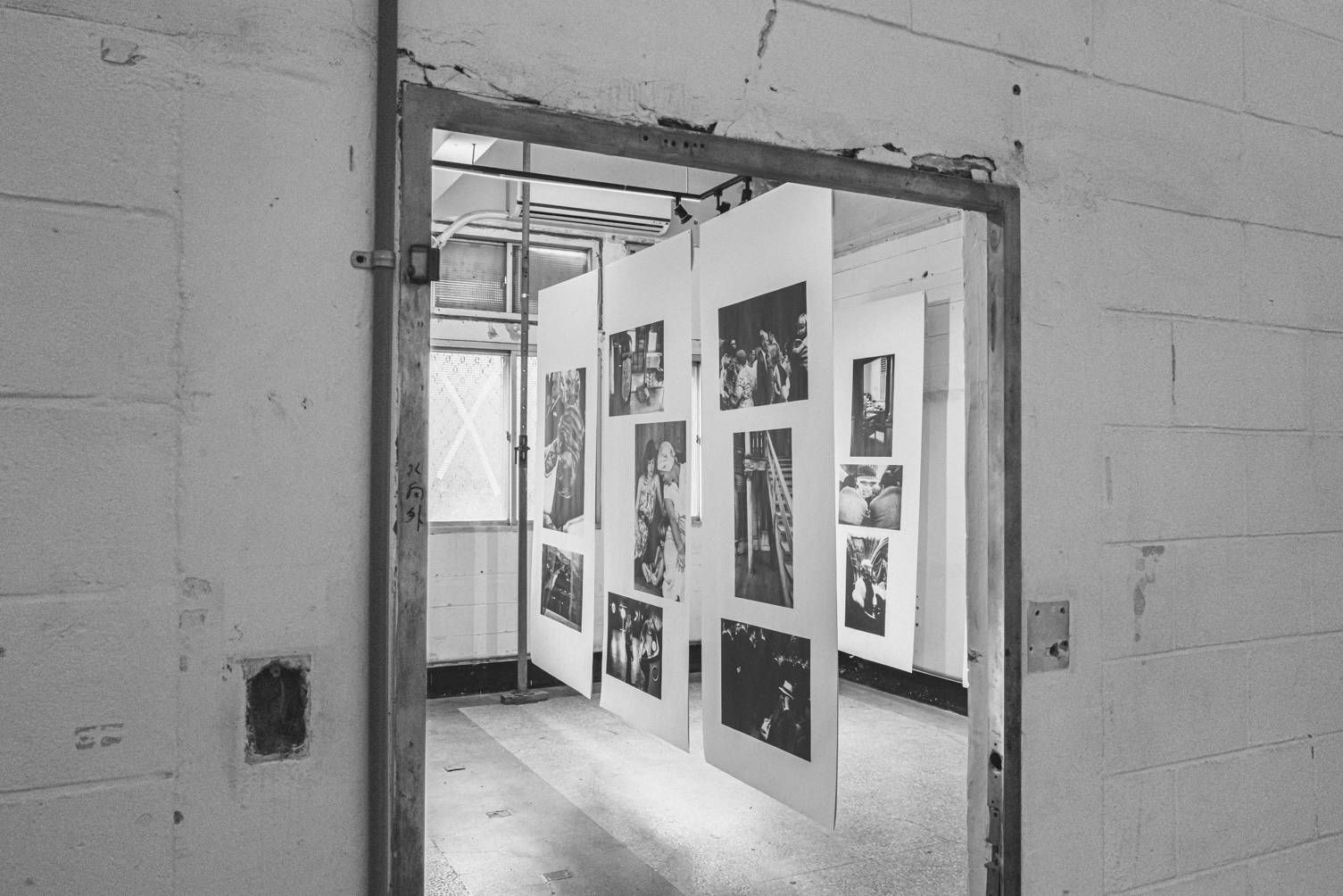
Photo credit: Enbion Micah Aan
Here, I will briefly explain the technical aspects of the photographic object for readers who may be curious about what sets this exhibition apart from a more “conventional” photography exhibition in terms of printing. Usually, when we see photographs in museums, the photographic object (that is, the photograph in the frame) is made with a traditional photographic process. For example, if you see an Atget photograph in the museum, it is an albumen print; if you see a Robert Frank photograph in the National Gallery in DC, it is a gelatin silver print. Modern digital prints, on the other hand, are usually pigment prints. These traditional photographic printing processes produce unique prints but are costly to produce. They are also often fragile and available in small numbers, making their handling and moving costly.
What you will see in this exhibition, however, are offset prints. Offset printing is one of the oldest printing processes, where plates are used to transfer the ink to paper. Offset printing is used for the most commonly seen printed objects you would encounter. Most flyers and books, for example, are offset. The advantage of offset printing is the low cost, particularly when printed in high volumes. However, traditional offset prints would not produce the same detail that, for example, a gelatin silver print might have. Yet, offset printing technology has advanced to the point that it is possible to match that of traditional prints. Steidl explained that when he reprinted Henri Cartier-Bresson’s The Decisive Moment, what he produced was indistinguishable from the original photogravure; it was not just a success for him, but a success for offset printing.
Careful readers will ask if offset is cheaper and can rival some traditional photographic printing techniques, but why do photographers not do it all the time? The answer comes down to cost and skill level. When printed in small volumes, the cost of offset is higher than traditional photographic prints, and the barrier to entry for print quality that rivals conventional photographic printing techniques is not low. A master like Steidl can pull it off, but it would be difficult for your run-of-the-mill offset printer. Also, specific to this exhibition, the plates created for it can be used to print another exhibition, and there have been more than 50 exhibitions thus far.

Photo credit: Enbion Micah Aan
Another factor that makes offset printing essential to this exhibition is that Robert Frank’s photography is uniquely suited for offset printing. Frank’s signature look is characterized by grainy, high-contrast, and almost hazy visuals at times. The inky look of offset printing actually adds depth and warmth to his photography. In 2006, I visited the National Gallery in DC to see Frank’s original gelatin silver prints, and I prefer this exhibition in large part because this style of printing and exhibition more effectively serves the photographer’s sensibility and vision.
This is not, however, at all a criticism of the excellently curated exhibition by Sarah Greenaugh. The 2006 landmark exhibition featured the original gelatin prints and had a more academic/museum sensibility, which was appropriate for the purposes of the National Gallery. This exhibition, on the other hand, feels like Frank is speaking to you personally through his photographs. It also features larger prints than the original silver gelatin prints. The original silver prints might have more detail. Yet, these unframed, inky offset prints in a shabby ex-military base feel more intimate and more like something Robert Frank would personally enjoy, a sentiment confirmed by Steidl himself.
As we walk through the exhibition, it is easy to be impressed by Frank’s work, but I’d like to suggest that we do not simply admire Frank’s work. Instead, we should also examine Frank’s time and the historical circumstances that made Robert Frank or The Americans possible.
Born in 1924 in Zurich, Switzerland, Frank emigrated to the US in 1947. The photographers who influenced Frank the most were Jacob Tuggener, Bill Brandt, Edward Steichen, and Walker Evans. Visually, one can easily see Tuggener’s and Brandt’s influence in Frank’s work. Both Tuggener and Brandt produced remarkably penetrating work and used the photobook as a way of expression. On the other hand, Steichen and Evans, mentors to Frank, helped secure his Guggenheim grant that allowed him to travel across the US for The Americans.
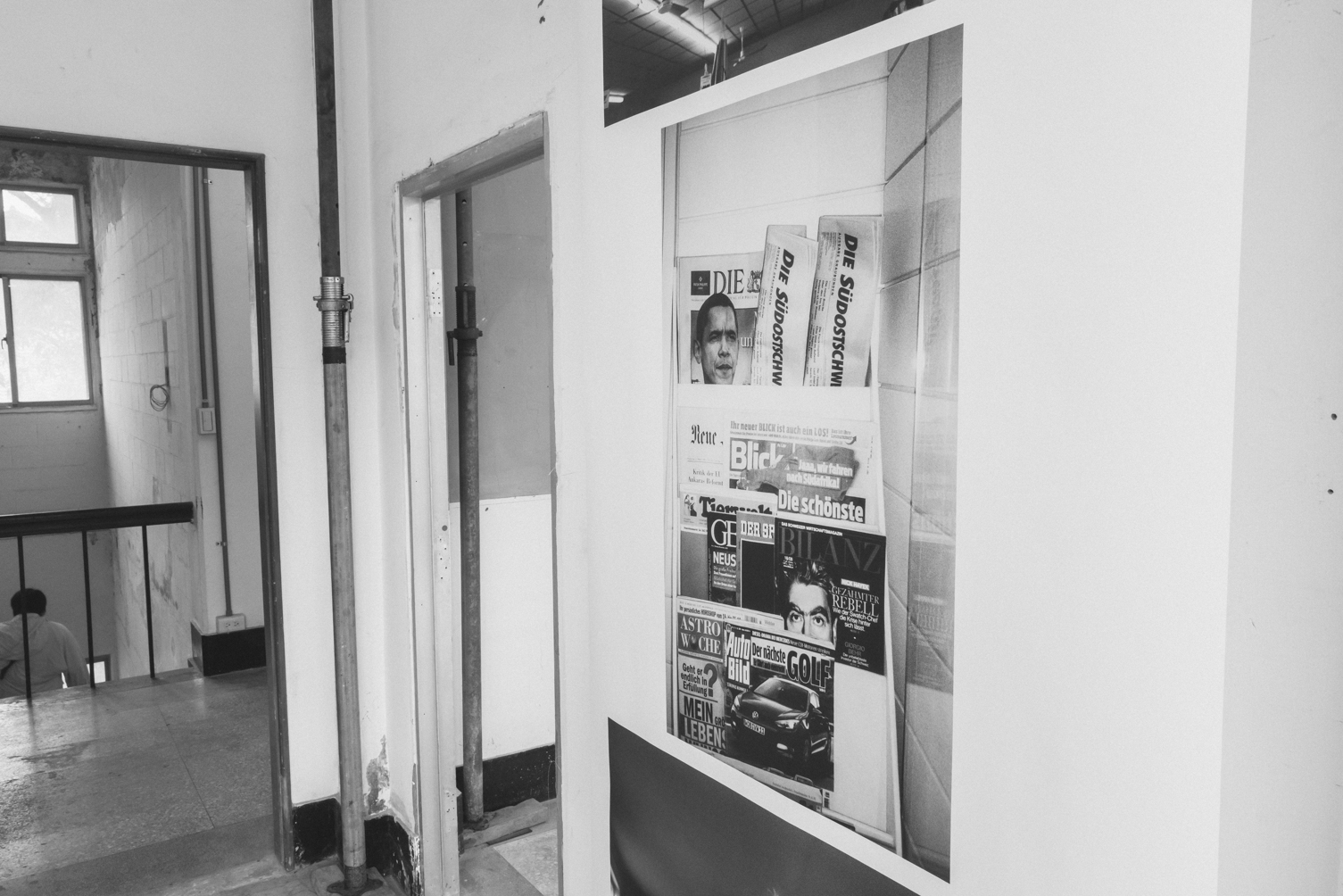
Photo credit: Enbion Micah Aan
A young Frank witnessed the last phase of the era when photography was the primary visual medium before television started to take over around the mid-1950s and certainly by the 1960s. It is probably tough for us in 2025, when virtually everyone has a camera in the form of a smartphone, to appreciate how seriously photography was taken as a medium 100 years ago. One should consider contemporary discourses around social media, AI, and other technologies to find parallels with how photography was once taken very seriously by its practitioners when it was the dominant visual medium.
Here, I’d argue that it is this very seriousness that produced someone like Frank. Photographers back then were very much concerned with the ethical core of the medium, and had intense and lively debates around what photography/photographers should do. It is perhaps difficult for us to imagine that photographers were thinking in lines of photography being “honest”. It was also a time when American politics were arguably more left-leaning, with unions being common and the New Deal fresh on people’s minds. (The New Deal, incidentally, was also instrumental in shaping the history of photography, but that is another story.) It is no accident that photographers from Frank’s time were often quite democratically minded. Socially, however, Frank would have witnessed normalized anti-semitism (Frank was Jewish), formalized racism in the form of Jim Crow, overt misogyny, and class division.
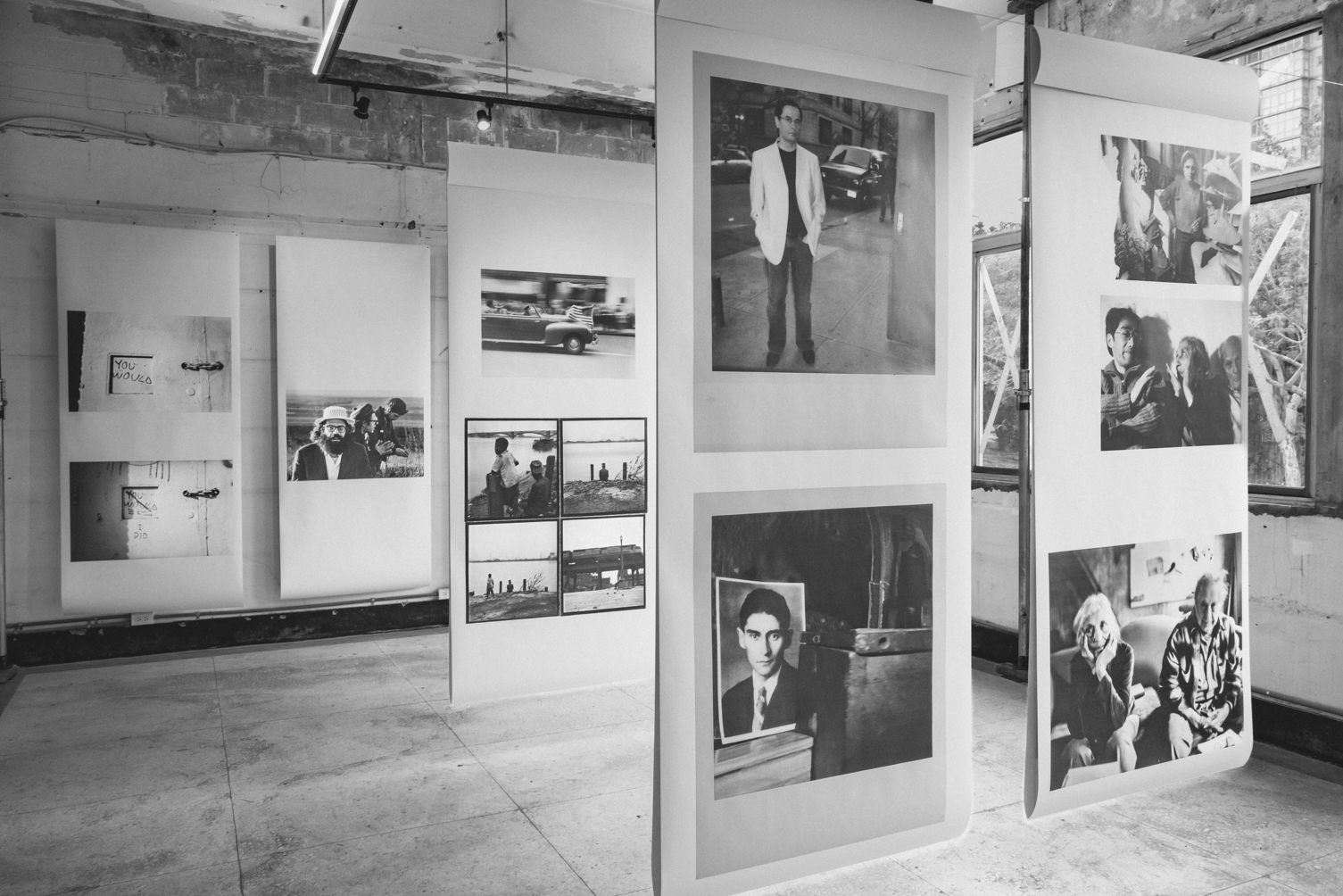
Photo credit: Enbion Micah Aan
Only with its prevailing sentiment of the time that photography needed to have a purpose, someone like Steichen, who was the Director of Photography at the Museum of Modern Art, would launch the exhibition The Family of Man in 1951. The Family of Man, of course, by today’s standard, or indeed even by standards of its time, was sentimental and idealistic. Still, one can’t argue with the quality of photography this exhibition included. Nor can we ignore the sentiment at the time that photography should serve a purpose. Frank’s work was also included in The Family of Man, most notably, perhaps, his photograph of the Welsh Miner, Ben James. The Family of Man proved to be a popular and culturally significant work, having been toured around the world and seen by millions. However, its popularity also came with quite a bit of criticism.
Frank’s The Americans, on the other hand, was not initially popular upon publication in 1957. In fact, reviews were hostile upon its release. However, rather quickly, the book gained respect amongst his peers and eventually became widely known and admired.

Photo credit: Enbion Micah Aan
Frank, interestingly, did not necessarily set out to demythologize America. It was more of his concern for everyday people, his “losers” of the society, that peeled the American facade and “sucked a sad poem right out of America onto film.”, as Jack Keruoc would describe Frank’s photography. It is worth thinking about whether The Americans could have gained traction without the cultural and political mood of the time, which coincided with the counterculture, anti-war, and civil rights movements around the time of its publication. When I walked through the galleries and looked at these prints, I could not help but marvel at how insightful and perhaps prophetic these photographs are, as we still grapple with the same issues today.
However, The Americans, being a seminal body of work, of course, resists straightforward political interpretation and categorization. Its power lies in the atmosphere, the mystery, and a deeply felt sense of loneliness. Frank’s photography reveals, instead of describing or lionizing. The very truths of the revelation give the body of work an enduring quality.


Photo credit: Enbion Micah Aan
After the publication of The Americans, Frank moved into filmmaking, and by the time The Americans was widely recognized as a masterpiece, Frank was already primarily a filmmaker. This from-photography-to-film trajectory seems familiar, as William Klein, Stanley Kubrick, Chris Marker, and Agnes Varda all followed the same path.
Fortunately, Frank did not abandon photography entirely after The Americans. His photographic output, however, turned inward and personal. It is hard to speculate as to why he turned inward. Still, personally, I can’t help but feel a parallel to how the society at large made a neoliberal turn and emphasized the personal and the individual. This inward turn towards the self was well-articulated by Adam Curtis’ remarkable documentary film, The Century of the Self.
However, this is not to dismiss Frank’s later work. His later and more personal work is hauntingly beautiful and mysterious. His later output, while no longer sociological, still deals with complex themes, such as relationships, family, and mortality.

Photo credit: Enbion Micah Aan
This exhibition includes many photographs, so one should plan the visit accordingly. It includes all the pictures from The Americans, the contact sheets, feature-length films, short films, and Frank’s later work.
Besides this Frank/Steidl exhibition, the Taiwan International Photography Festival, the host of the exhibition, also has two other exhibitions and a camera project. Dear Taiwan is an outdoor exhibition located right outside the Frank/Steidl exhibition. The other exhibition, After the New Waves Award, is a thoughtfully curated showcase featuring young photographers in Taiwan. And, finally, The Democratic Camera is a conceptually compelling photobooth that constructed a camera from materials sourced from democratic nations.
These exhibitions will be available for viewing until October 6.