by Sheng-mei Ma
語言:
English
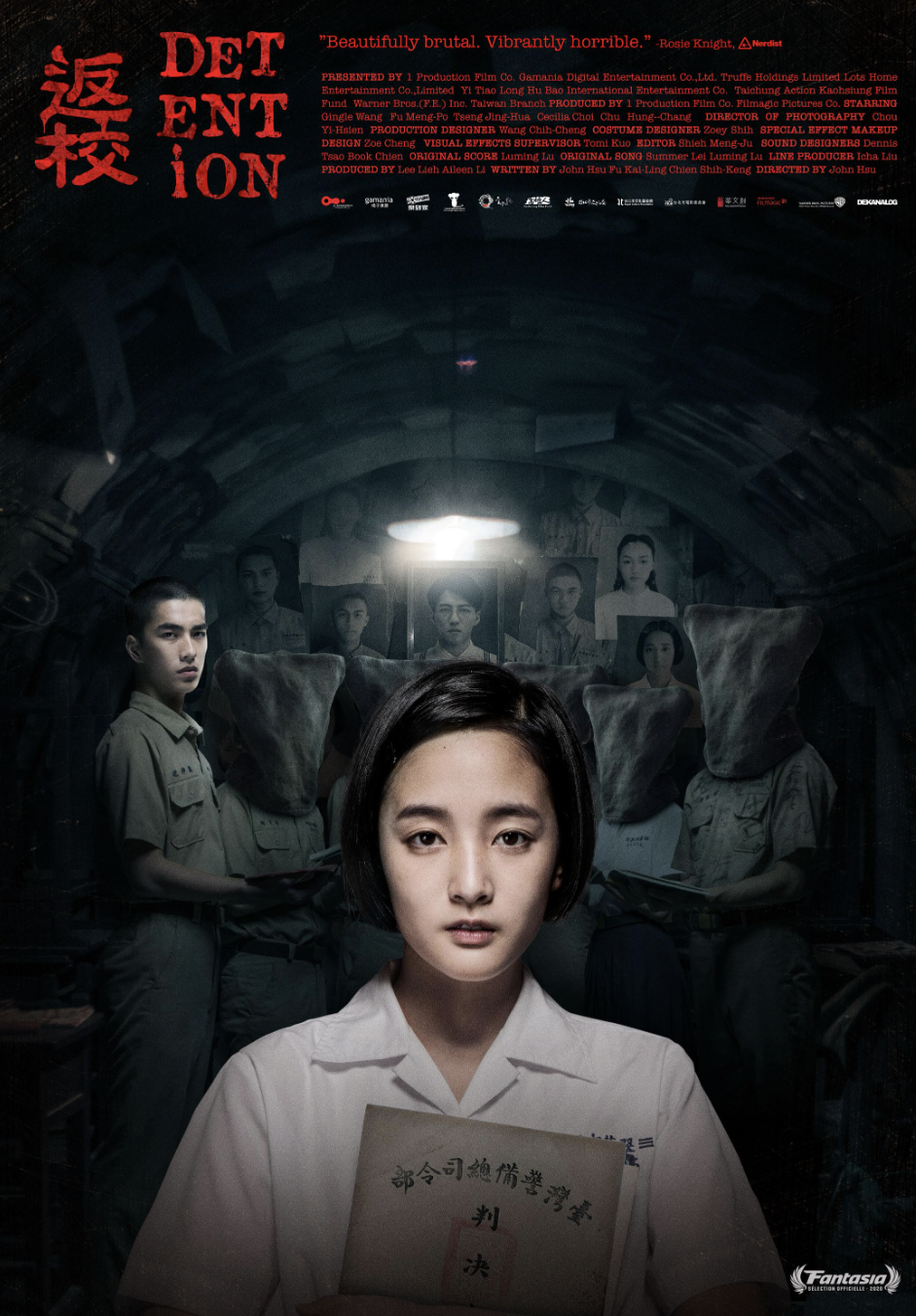
Photo credit: Movie Poster
Excerpt from Chapter 9 of Sheng-mei Ma’s Chinese Serial: Cannibalizing Classics, Colonial Slaves, Sino-Noir, and Taiwan (Bloomsbury 2026)
JOHN HSU’S ghost film Detention (2019) adapts a popular video game from the company Red Candle. Set in Taiwan’s oppressive White Terror era (1947-1987) under Chiang Kai-shek and his son, the film’s Chinese title Fanxiao (返校 return to school) points to the custom of designated dates during the summer vacation for students to return to school for a checkup of the progress due in their homework as well as for group cleaning of the school grounds and facility. (Throughout my schooling K-12 and college in Taiwan, I had never figured out which came first.) Yet fan is a double entendre on return (返) and revolt (反). Indeed, Detention returns to the White Terror to denounce it, upend it. Reversing not only to the past but also the present, even the future, the film’s claustrophobic mise-en-scène of Cuihua High School (翠華中學) is to be demolished to make way for the skyscraper Cuihua Tianxia (翠華天下Cuihua Under the Heaven), as the giant billboard outside the shuttered school gates advertises. Hua epitomizes Chineseness since time immemorial; tianxia is the revered term for universal values.
From spectral rubble to grandiose real estate development, political traumas perpetrated on the school grounds are buried under modern progress, except its namesake cui as a color bifurcates between green and blue, jostled right next to each other in the spectrum of a rainbow. Furthermore, feicui (翡翠) is jadeite, known for having “36 water, 72 beans (green), 108 blue” in terms of the diversity of jade colors. Alas, proximity breeds hostility, clamoring to own the same space called Taiwan. Green is the party emblem for the ruling Democratic Progressive Party championing Taiwan independence; Blue for the deposed Nationalist Party associated with foreign powers from mainland China. The Blue Party’s crime committed in the past ferments/foments the Green Party here and now, as both are intimated by the word cui: blue-or-green, blue-and-green, first-blue-then-green, now-green-no-blue. Did John Hsu, as Nipponophiliac as his film suggests, intend this ambivalence of no/know blue, since his film courts, intercourses with, the White Terror? To “know” in the biblical sense is to intimately, sexually, transgressively involved. Rather than reading too much into cui, this calls for a deep dive into Nipponophilia’s subconsciousness. Since cui also puns on fragile or brittle (脆), John Hsu et al.’s “Know Thy Enemy” of the Nationalists’ White Terror aims to Say No to the enemy of Red China. However, resentment, hate, and even taboo often flip from love spurned. Saying No to thy enemy may come after having failed to know, carnally, thy frenemy. The restive morphing between green and blue points to the uncertainty of the Taiwan syndrome.
The female lead Fang, a highschooler at Cuihua, has a crush on her music and art teacher Chang, who, along with Teacher Yin, runs a covert, banned Study Group at the school storeroom accessed through the laobing-custodian Uncle Gao’s key. (Laobing means old soldiers or veteran.) Teacher Yin warns against the teacher-student intimacy, fearing in part the exposure of their Study Group to the school authority embodied in a Teacher-Officer Bai, severe and menacing in military uniform and cap. Although never stated explicitly, Yin’s suspicion arises from the fact that Teacher-Officer Bai and Fang’s father are close military colleagues, decidedly Nationalists and possibly mainlanders. Much of Taiwan’s inter- and intra-ethnic lines must be teased out; any incontrovertible, hard evidence is shunned to provide plausible deniability and to avoid antagonizing a sizable segment of the domestic market. Nonetheless, a rather heavy-handed giveaway is the archvillain’s surname Bai (white) à la the decades-long political persecution. What’s more, the video game character Bai’s facial features simulate, alleged by Chia-rong Wu in “Spectralizing the White Terror,” those of the former Nationalist president Ma Ying-jeou from 2008 to 2016 (81).
Fang’s family lives in a Japanese-style house that the Nationalist government inherits from the Japanese era. Such single-family housing is the envy amid postwar austerity, passed on to Nationalist government officials and military officers of a certain rank. The masses of the approximately one million mainland refugees in the 1949 exodus from China must contend with hastily built juancun, or military personnel and dependents compounds tantamount to urban housing projects in the US. Fang’s father played by Ching-Ting Hsia of Hubei, China, ancestry is alcoholic and violent, a stereotypical patriarchal mainlander, personifying Chiang’s regime, oppressive and predatory. Her mother, played by Pen-yu Chang, goes on to star in the 20-episode Taiwanese-language TV series Hun-in kiat-giap-sik (Graduating from Marriage or The Commencement of a Marriage 2022-23). By implication, Fang amounts to, in all likelihood, a “taro-sweet potato” child, born of a mixed family of a mainland Chinese “taro” father, a food transplanted from outside Taiwan, and a Taiwanese mother likened to the native-grown “sweet potatoes.” A complete misnomer on both sides: taros are less from northern China than the South Seas, including Taiwan itself that is part of the Pacific archipelago chains; sweet potato is fanshu, the first word fan meaning barbarian, hence barbarian potato in lieu of Taiwanese potato.
A decisive moment occurs when the mother with bruises on her forehead tosses moon blocks on the wood floor of the Japanese house (Figure 1), kneeling and praying to the shrine of Guanyin Pusa or Mazu, Goddess of Mercy (Figure 2). Mazu is a protector of seafarers and migrants with mass following in southern China and Taiwan rather than the arid, land-locked northern China. In other words, Guanyin or Mazu appears more to be the mother’s guardian than the father’s, who hails from farther north and pooh-poohs her devotion. Moon block tossing, in particular, comes from the unique Taiwan temple culture of prognostication, where believers throw the two halves of a crescent-shaped wood block, one side flat, the other convex and round. Should the flat side and the round side appear, then deities have approved of whatever is asked of them. One can theoretically repeat until Gods OK it. The divination average of “success” lies between 25% to 33%, given the scenarios of two flat sides, two round sides, one-flat-one-round, and, in rare instances, one or two blocks standing on pointed ends. At the third toss in Detention, the Goddess grants what the mother wishes, which is to turn in her husband’s account book of bribery to avenge herself, “to be free of him forever.” Whereas the film echoes the American saying “the third time’s the charm,” i.e., only at the third toss does it result in what the mother desires, how many times exactly did the film crew have to toss for the perfect close-up of what the plot wishes—both the flat and round side up? Sheer chance, if willed with enough frequency, turns into the fate of betrayal and revenge. Moon blocks are deemed so pivotal in Detention that its official trailer with multiple shots of the bouncing blocks, accompanied by crystalline sounds, never showing how they land.
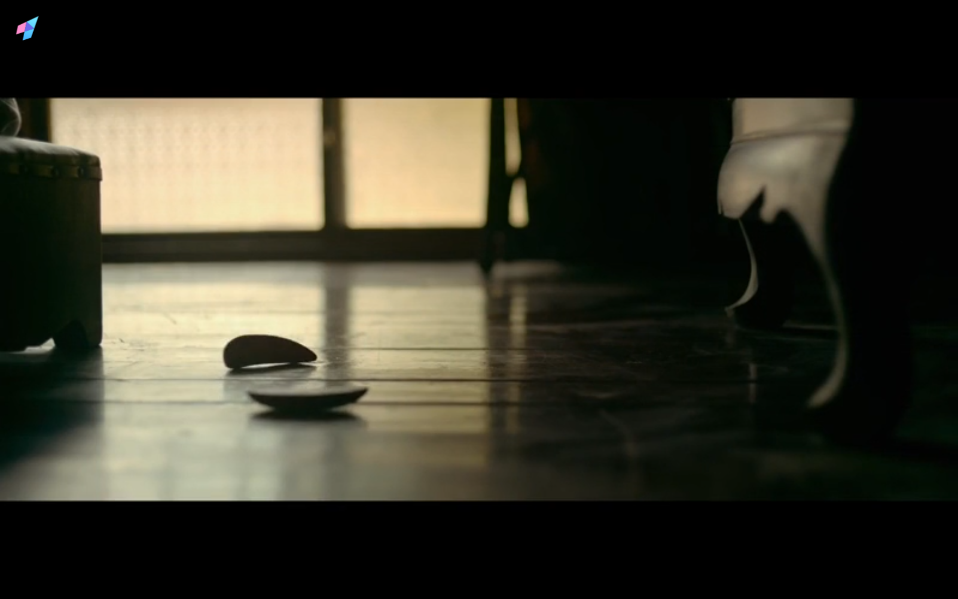
Figure 1: The mother tosses moon blocks for prognostication.
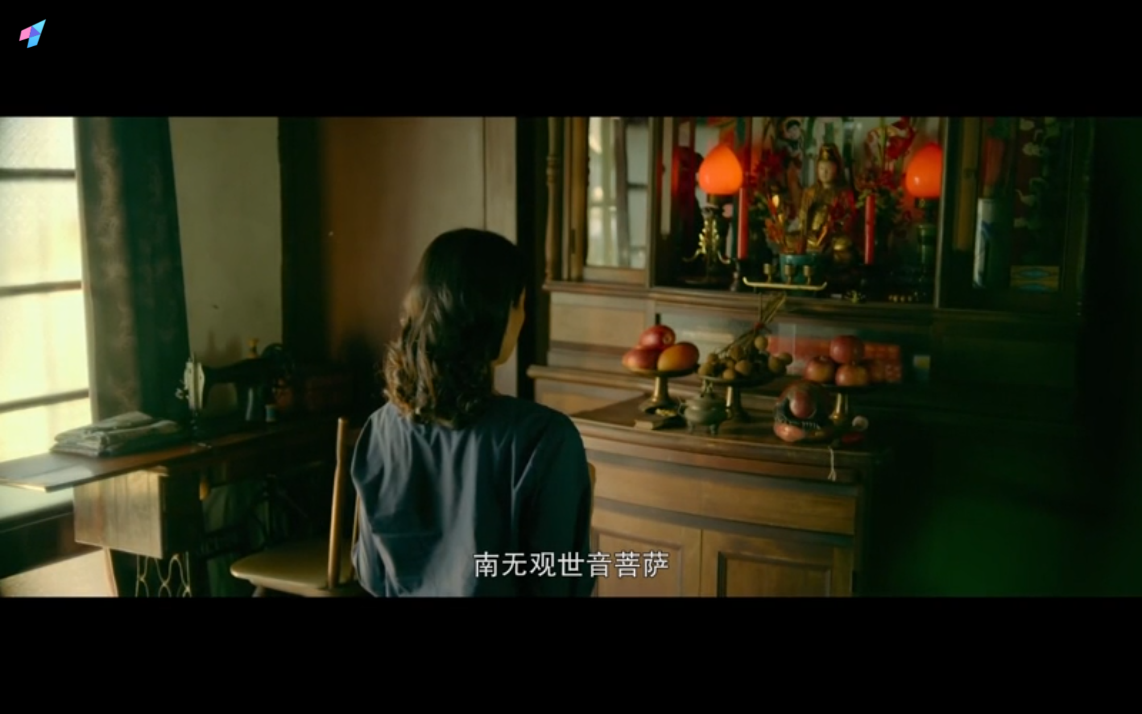
Figure 2: The mother prays to the Goddess of Mercy.
The discrepancy inherent within the misnaming of the taro-sweet potato daughter continues in the irony of a Japanese house lorded over by a mainlander father, who is removed by a Taiwanese mother turning the police state against one of its own. Located near the alcove in the Japanese house reserved for the Shinto shrine sits the Goddess of Mercy, with whom the mother conspires a revenge mariticide. Cultural forces are indeed as fused as Fang’s putative bloodline. The mother’s betrayal foreshadows and parallels Fang’s betrayal of the Study Group to Officer Bai with the intention of getting rid of Teacher Yin, a rival for Teacher Chang’s love. Fang manipulates Wei, a member of the Study Group who adores her, and obtains a banned book, with which she both informs on the Group and, in exchange, hopes to obtain her father’s release. Battling within Fang and the film is love and hate, Chineseness and Taiwaneseness, with the elusive figure of Japan slightly off-frame, as it were. But the erstwhile colonizer’s invisibility percolates into the filmic subtext. Like the Almighty, its physical absence denotes its omnipresence. Her naïve scheme eventually falls apart when the entire group are arrested, tortured, and executed. Only Wei is spared; Fang hangs herself out of guilt.
Detention is thus the repetition compulsion of the ghost Fang, whose curse is lifted only when Wei, entrusted by Teacher Chang on the eve of execution, retrieves Chang’s letter to Fang in the ruins of the school. To accentuate horror and love, the filmmaker crosscuts a bloodied Chang’s last words to Wei from the abyss of the White Terror with the belated confession in the voiceover of a dead man to a haunted ghost. The words of love have been folded and secreted, throughout the White Terror, in Lu Xun’s 1924 translation of The Symbol of Angst (苦悶的象徵) by Japanese art critic Kuriyagawa Hakuson (廚川白村). Doubly banned by the Nationalist not only because of the Japanese provenance but also the leftist Lu Xun, the book with the letter has been in a school cupboard behind a painting of, ominously, a single bloom of narcissus, the flower that seals the lovers’ bond. A figure from Greek mythology, Narcissus is so handsome that he falls in love with his reflection in a pool of water. Teacher Chang and Fang have cemented their love in late-night trysts weaving together a constellation of symbols: Chang’s drawing and sharing of narcissus and of the piano’s white and black keys. On that sketch of the keyboard, their fingers touch and intertwine when Fang teaches the teacher to play the colonial era Taiwanese-language song “Flower in the Rainy Night,” a 1934 tune of a woman’s woes in the image of petals felled by “heartless rain” (read: heartless man). “Flower in the Rainy Night” was so popular that it was translated into one Japanese military song and one popular song in 1938.
Given the irreconcilable differences of Greek Narcissus, a Japanese art critic, a Chinese leftist translator, and the Japanese-inflected Taiwanese tune, Detention manages to suture the self-love of two like-minded mirror images unto themselves, but the fragility of this union is palpable. The tune is played throughout the film as much for the romantic mood as for escapist flights. Fang turns up the volume of the radio playing that very song to tune out the squabble and wife-beating whacks from her parents through the thin shoji screen doors of the Japanese house. Unbeknownst to the viewer, yoked into one by subliminal association are pure, romantic love and Japanese era culture, all dashed by the meddling of the Nationalist Father(s) and, in particular, Officer Bai.
As the elderly Wei limps into the dusty and dilapidated classroom to hand over The Symbol of Angst containing Chang’s last words to the school age Fang, let us judge a book by its cover, since viewers are not privileged with any excerpt or discussion of Kuriyagawa. At first blush, the 1924 translation’s book cover features a female nude, bare-breasted, either relaxing in a hot tub or tormented in boiling oil. The natural assumption of the former, given the Japanese ritual of bathing, is soon replaced by the latter because her right leg is extended beyond the tub to clench a trident-shaped three-pronged pitchfork between the big toe and second toe, similar to geta wearing. The trident is anchored at her own neck, held in place by the left hand. The head angles itself toward the sharp edge, the red spot between the trident and her lips either her blood or her tongue licking, kissing the instrument of her demise. If it were her tongue that flashes red, then it echoes the sensuous date-like red nipples. The five red smears in the pool suggest blood seeping out of her cut. Be it the aesthetics of death or death porn, Fang the ghost relives her sin masochistically, to be released by Chang’s letter. To read against the grain, though, it is conceivable that the bather desperately pushes away the knife edge with her hand and foot, her head veering backwards. Love and hate, attraction and repulsion, reside in the same male gaze. Cinematically “citing” this cover illustration in an extreme close-up (Figure 3), John Hsu’s film outsources, intuitively, Taiwan the Orphan of Asia’s self-image onto a collage of alterity by means of splicing a Greek male god’s self-love, self-absorption with a Japanese/Chinese female nude’s self-hurt, self-splitting, or by having a Japanese bather fall on the sword associated with Greek Poseidon and Christian devils.

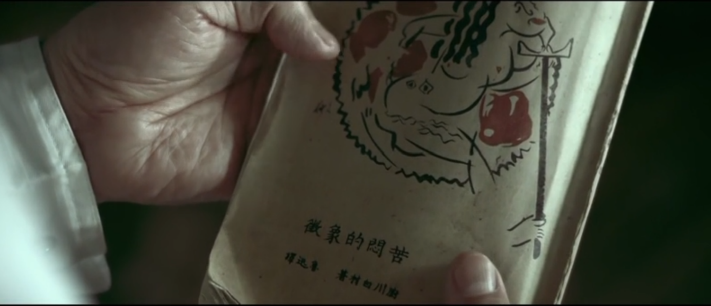
Figure 3: A cinematographic close-up of The Symbol of Angst in John Hsu’s Detention.
The book cover encapsulates the tip of discursive mélange in Detention, manifesting a psychological syndrome of affect overwhelming reason. Narcissistically, the swell of emotions takes over control from a cool head or decapitates it altogether. Its nativist sentiment nothwithstanding, Detention inherits this Sinophone legacy of beheading. Facelessness and headlessness undergird the horror of the White Terror, recurring like a broken record, metaphorically. As a matter of course, victims of political persecution in Detention have their heads hooded in burlap sacks commonly used to transport foodstuffs. As such, human heads are to be consumed. The female ghost dogging Fang has long hair covering her face in the vein of J-Horror Ringu (1998) and Cantonese jiangshi (stiff, hopping zombie) films. In a nightmarish scene, Fang is commanded by Officer Bai to slit, in macabre graphic detail, Wei’s throat to extract the banned book. Derivative of the Ent Treebeard from The Lord of the Rings: The Two Towers (2002), a towering Lantern Ghost in Officer Bai’s cap and uniform hunts down the school janitor Uncle Gao and chokes him to death. The killer and the killed look alike in their facelessness. The Lantern Ghost has a mirror for its face, whereas Uncle Gao’s eye is gouged out, leaving a hollow eye socket and gap-toothed (Figure 4). Even the light, humorous sharing between Chang and Fang in disfiguring, discreetly, the faces of school authorities in a yearbook resonates with the forthcoming horror of defacing, dehumanizing.
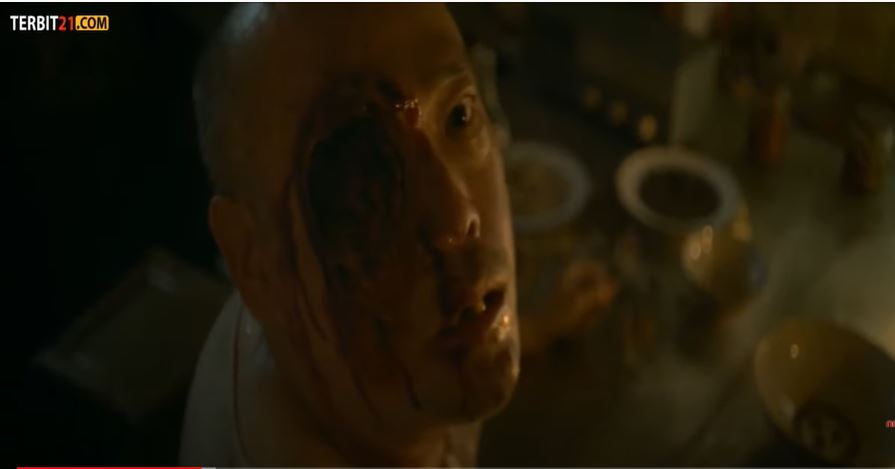
Figure 4: Uncle Gao’s eye gouged out.
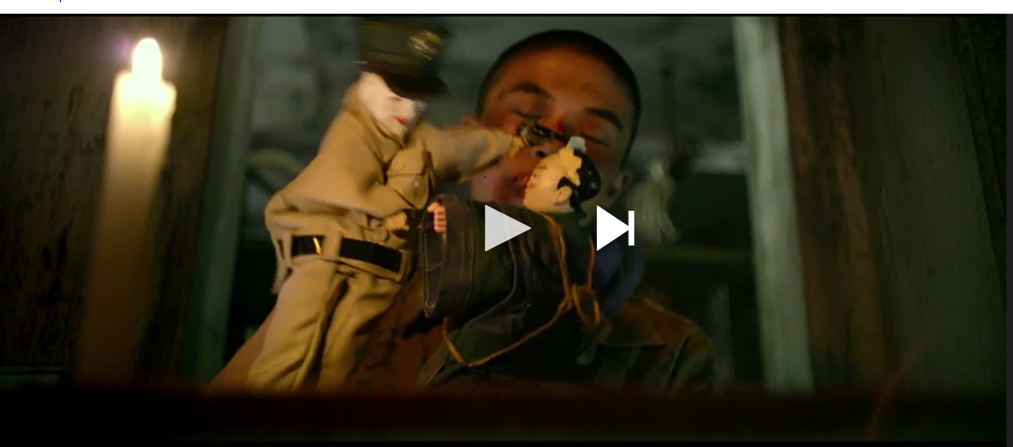
Most essential to the theme of headlessness stems from a marginal character. A fellow Study Group member, Ah Sheng, carries around his favorite hand puppet Dragon Warrior in Taiwanese folk art. This Warrior used to prevail over his rivals by wielding the sword deftly, only to lose its carved and painted wooden head in the chaos leading to the arrest. A beaten-up Ah Sheng then finds time to play his hand puppets one last time. The last show witnesses one puppet in the likeness of Officer Bai, adorned with the military uniform and the cap sporting the Nationalist logo of a radiant sun, as he points a pistol at the Dragon Warrior’s forehead (Figure 5). The traditional heroic swordsman’s finale foreshadows the ensuing executions of Teacher Chang and others. Akin to throwing moon blocks, a coin toss ends in heads or tails. These tales of headlessness tell of tails that are the inverse of what is presentable, the dark underside of history and collective memory. Human ancestors once had tails, which had since receded into tailbones or coccyxes, part of the posterior, the “behind” to be hidden, clothed, forgotten. However, these tales of tails persist in haunting, shadowing humanity, since any head may be offed by the command of the Red Queen of Lewis Carroll or the Sun King of Chiang Kai-shek, who is a mere stand-in for the Red King from Beijing. As terrifying as he may seem, Teacher-Officer Bai (white) is but a placeholder for Comrade Red: the White Terror of yesteryear whitewashes the Red Flood to come.