

by Sheng-mei Ma
語言:
English
Photo credit: Film Still
NEAR THE END of the veteran journalist Scott Simon’s NPR program, Weekend Edition Saturday, on November 1, 2025, Simon asked Sir Anthony Hopkins to read the poem at the close of his memoir We Did OK, Kid (2025). The poem is T. S. Eliot’s “The Love Song of J. Alfred Prufrock” (1915), a poem of exhaustion and despair vaguely recalled by Hopkins’s frail, dementia-stricken father at Sandown Beach on, possibly, the Isle of Wight, now recited live, on the air, by the 88-year-old Hopkins. Bereft over the memoir’s “we”—his late father and the aging of the titular “kid”—Hopkins choked up again and again, begging out of the reading around the lines “I have heard the mermaids singing, each to each. / I do not think that they will sing to me.” “I can’t do any more of that,” Hopkins apologized to Simon, “it kills me.”
Quite by chance through the staticky radio in my old car, an old man heard the clip of another old man interview yet another, transporting the listener that Saturday morning from errands and grocery shopping. A happenstance commences—closes like a commencement ceremony as well as initiates another—a reflection on endings, which invariably begin anew. The end is inherent within the present, every passing moment whose death goes barely registered, until the finis sets in, either smilingly sung or tearfully mourned, the corners of the mouth either up or down. The one who feels like being killed can conceivably wing it still: to take flight from and to improvise, to wriggle out of the prescribed script of tragic end, as do Caribbean-inflected pop songs and the Ghost Isle Taiwan’s films. More conventionally, though, one can simply let fall like a good child would, to actualize the collective unconscious of the end, as do white mainstream artists of Eliot, Hopkins, Simon, Jim Morrison, Francis Ford Coppola, and more.
In 1967, Morrison of The Doors sang “The End” in a monotone dropping off at the end, literally. Such doomsday finality struck a chord in Coppola’s Apocalypse Now (1979), the soundtrack silhouetting the cataclysmic dystopia of the Vietnam War. Morrison’s poetic, prophetic voice plunges into madness and chaos in Coppola à la Joseph Conrad’s Heart of Darkness (1899), both the novella and the film “stained” by non-white barbarism in the jungles of the Congo and Vietnam, respectively.
The same line “This Is The End,” however, is delivered light-heartedly, with a trilling, thrilling upward lift in the Caribbean pop song “You’re Wondering Now,” made famous by the Jamaican duo Andy & Joey in 1964. The song lilts toward the end, going up like air, carried by the current of wind. Instead of falling silent for the inevitability of closure, the music flees from, and forecloses, any finale. “You’re Wondering Now” in a faster tempo becomes the theme music for the long running BBC TV series Death in Paradise (2011- ) set in the fictional Caribbean island St. Marie. The series’ longevity hinges on the winning formula of each episode opening with a corpse, soon channeled into the theme song, followed by the whodunit under a series of four white English and Irish detectives, until Black Londoner Don Gilet of the fourteenth season in 2025.
Although delivered solely in instrumental music of the TV series’ opening credits, the lyrics and the style of singing of the song itself sharpen the conundrum of termination-cum-genesis, death-cum-paradise. To be precise, the irony materializes in the vocal rising over what is supposed to be the falling sound of “end,” one sinking into oblivion. The raising of the fallen vaporizes, makes light of any qualms over Freudian Thanatos. The meaning or the content of “end” is touched and resurrected by the delivery or the form. The elocution of the word belies the word:
You’re wondering now
What to do, now you know this is the end
You’re wondering how
You will pay, for the way you did behave
In addition to the surprise over the “end” that stays somehow aloft aurally, the other “last” word of “behave” is sung by the duo Delphine & Earl “Chinna” Smith in a way that deletes the “h” sound altogether, alchemizing it into “be-āve,” evoking the mute “h” in French. Contrary to tropical, malarial jungles maddening Kurtzes gone native in Conrad and Coppola, the postcolonial Caribbean hybridization makes possible certain “glitches”—rising “end”; dropped “h”; and the show’s indigenous accents faked by the supporting rota of Black British actors—that formulate the escape clause from the covenant of life and death.
Yet only someone who feels trapped would fantasize flight and deliverance. This paradox surfaces indubitably in Figure 1, a screenshot from Taiwanese film Island Etude (2006). The film follows a hearing-impaired aboriginal bicyclist around the coastline of what I have dubbed “Ghost I(sle),” i.e., an isle with twenty-three million “I-s” who are homeless, stateless phantoms. The “Ghost Island” has been the derogatory moniker since the Japanese colonization for the subtropical island’s “backward” state of development, tropical diseases, and unruly “savages,” a stigma Taiwan now wears like a badge of honor, akin to the N-word bantered about by gangsta rappers. Hence, in this tortu(r)ous manner, an “orphan” island nation, which few in the international community officially deems a nation, projects itself into a disabled cyclist in a circum-isle pilgrimage, as though caressing the island’s extremities for self-consolation, if not self-medication. Early in the tour, he encounters a film crew on Taiwan’s Eastern shore filming an indigenous singer in a wig gelled in a permanent upturned swirl. The hairstyle suggests that the Pacific wind raises airborne not only the hair but also the person—the I(sle). Contravening the law of nature over what goes up must come down, the wig defies gravity, perennially soaring up. This whimsical, mischievous flare reminds one of the long and upturned eyelashes worn by the witch mother played by Agnes Mooreland in the TV series Bewitched (1964-1972), not to mention the British pop singer Amy Winehouse’s dramatic ink-black eyeliners reaching all the way up to her temples. Among her repertoire, Winehouse (1983-2011) used to perform “You’re Wondering Now” in her contralto vocals. Neither the happy song nor the uplifting eyeliners helped, though, in deferring her early death of drug overdose.
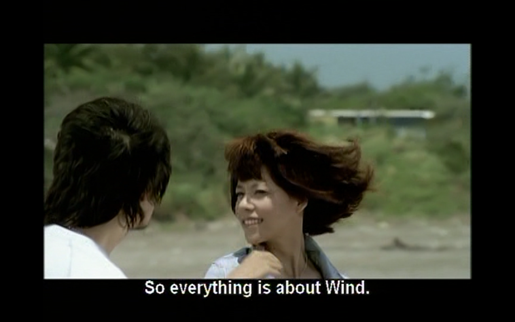
Figure 1: The wig gelled upward in Island Etude
Any romantic overreach is seeded with its own destruction. The figure’s closed caption “So everything is about Wind” aims to showcase the affective upswell like the Pacific air flow. But the word “wind,” serendipitously associated with the titular “Wing It,” comes embedded with its imminent downfall. The wings, arguably, are clipped, crashing down. Unbeknownst to the filmmaker and the I(sle) in search of an off-ramp, or an up-ramp, rather, feng (風wind) puns with madness (瘋), the imaginary flight shrouded in the radical of chuang (疒 disease). To fly away is tantamount to repetitious, obsessive daydreaming for all but the wingèd. Not only is the I(sle) unable to take to the air, but it crouches under the long shadow cast by the dark continent across the Taiwan Strait, ever slouching toward itself, which is all the more reason to sing and smile.


And the I(sle) has a role model in the bravado of Taiwan’s White Terror prisoners bound for the execution ground. Extracted from Untold Herstory (2022), Figure 2 captures one such female dissident looking directly into the camera in an open-mouthed grin, a provocative gesture of defiance before Chiang Kai-shek’s reign of terror (1947-1987) disposes of her. The overexposure of Figure 2 lends the image a spectral, otherworldly aura. This reel moment reproduces the real moment when a historical White Terror victim, Fu Ruzhi, struck an identical pose with a smile in Figure 3. A panoply of White Terror prisoners exhibited such shared countenance prior to the firing squad. This could only have come about through a consensus, reached in prison among Fu and her fellow victims, of going out with laughter in unison, to make a mockery of their executioners.

Figure 2: White Terror victim smiles before the execution in Untold Herstory
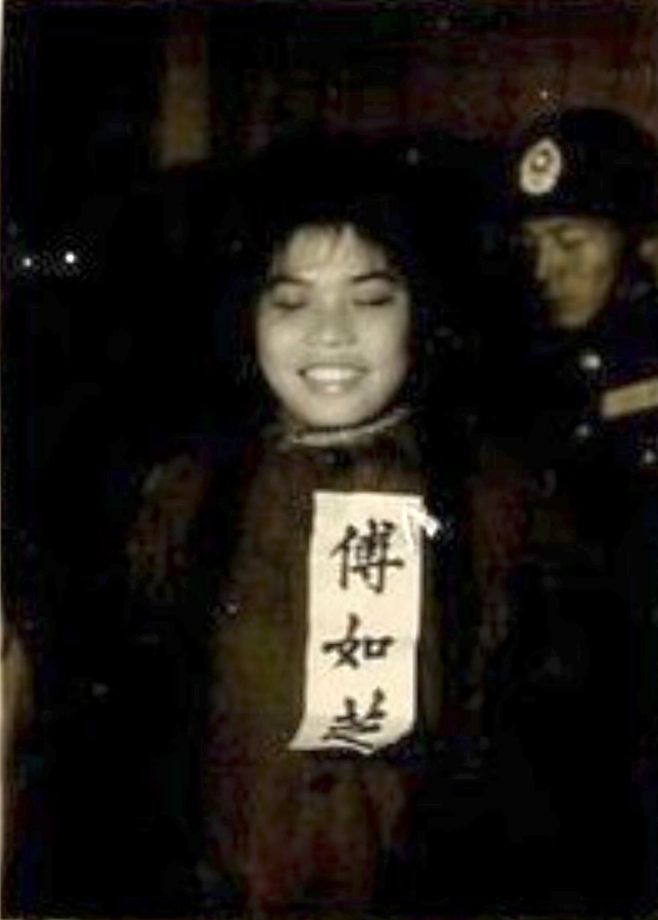
Figure 3: A victim of the White Terror, Fu Ruzhi (1932-1956), before execution
There are many more stylizations of upward lilts in place of endings. The Joker paints his mouth slanting up in a sardonic sneer. Traditional Chinese architecture features upturned swallowtail roof ridges. Peking Opera pulls and stretches performers’ eyes upward for a long slender “phoenix eye” look, which is stereotyped as the slant-eyed Orientals in the West. Arab and Oriental shoes sport upturned toes. Viking long ships come with a bow and stern curving up, similar to the ocean waves swirling, cresting in Katsushika Hokusai’s The Great Wave off Kanagawa (1831). More recently, The Wall Street Journal reported that “Tech Bros Are Getting Face-Lifts,” “neck lifts and eyelid lifts” for “fears of aging out of the workforce” (Matt Alagiah, Oct. 24, 2025). Amid all these stylized, fantastical escapades from the law of gravity and the nature of things, how do I elude the coming end of this essay? Dear reader, why not join in with a thumb up or thumb down, thus breathing new life into the on-going, unending serial on “This Is The End”?