

by Sheng-mei Ma
語言:
English
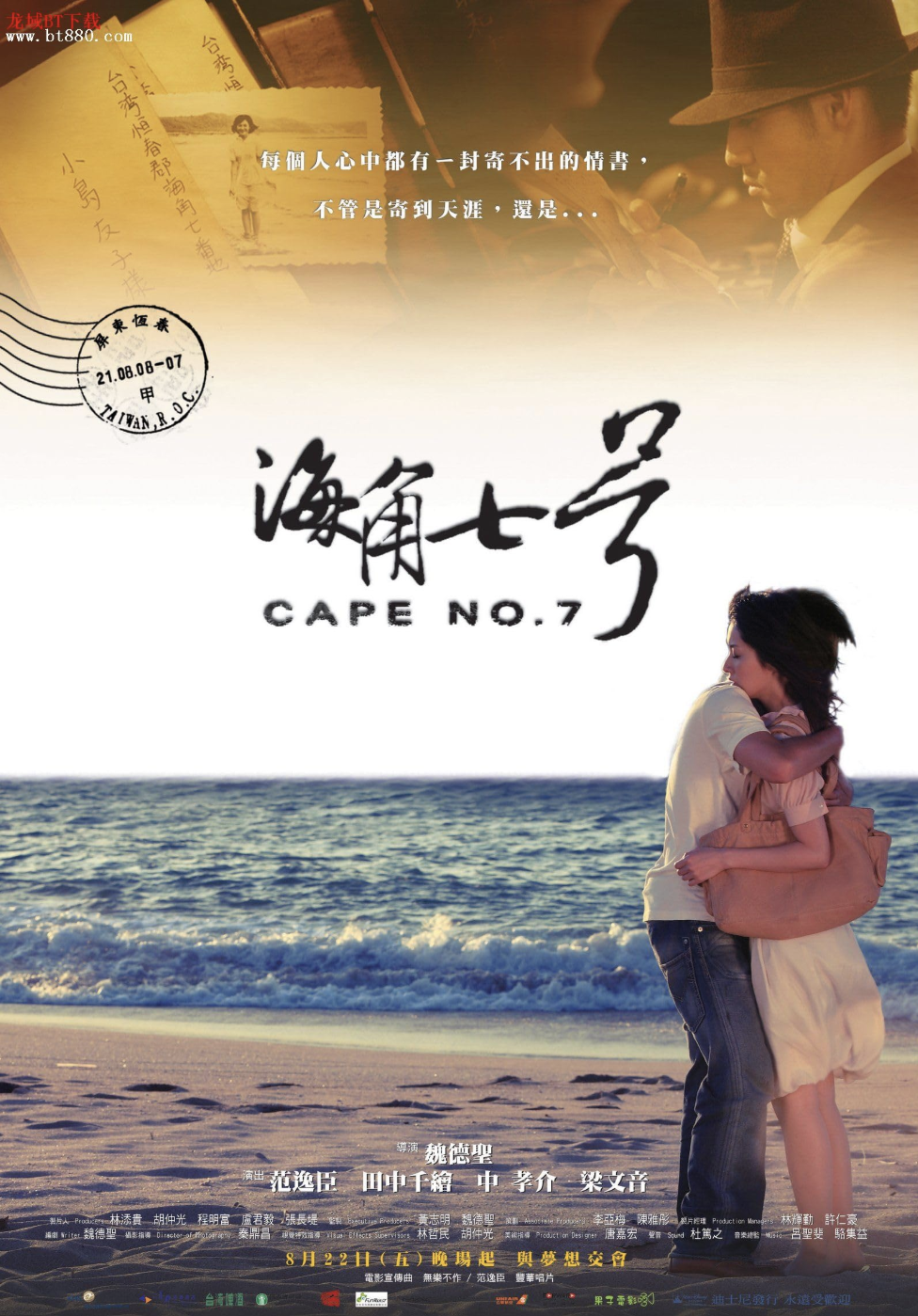
Photo credit: Movie Poster
THE MOODY BLUES was being disingenuous in rhapsodizing “Letters I’ve written / Never meaning to send.” To be precise, the rock band was doing nothing but sending it in “Nights in White Satin” (1967), a heavenly epistle that reached an enraptured Taiwanese high schooler from an austere neighborhood one afternoon after school, invited to a wealthy classmate’s mansion to enjoy his vinyl albums. (He grew up to become a prominent politician in Taipei a decade ago.) I was awestruck by the well-heeled and their “high” culture. I still recall being bewitched by the futuristic cover to Pink Floyd’s The Dark Side of the Moon (1973), apparently a recent acquisition through ways and means inconceivably to anyone but the most affluent in the backwater of the mid-1970s Taiwan. To this day, half a century later, I still hum “Blue birds flying high / Tell me what you sing” and other snatches in showers. Subconsciously, I have substituted “sing” with “see,” the visual dimension far more fitting than the auditory one, given the great distance. In any event, any listener would hear and understand what the vocalist is crooning “up there.”
I suppose we all continue to write to the Blue Bird because we wish to soar with and even be it from our early years. Failing that, as it is wont to happen, that Taiwanese youngster turns into this curmudgeon, casting a cynical gaze at filmic nostalgia in twenty-first century Nipponized Taiwan and Chaoshanized China, in Cape No. 7 (2008) and Dear You (2025), respectively. These two films across the Taiwan Strait nearly two decades apart demonstrate two insular homebodies staging, ironically, nostalgic homecoming so feel-good and so resonating with the ethos that they were domestic box-office hits, without ever crossing to the other shore of the Strait. Unlike the far-reaching, high-flying Blue Bird from the British Isles, these filmic epistles stay in place, “never meaning to send” afar from the home turf. In Taiwan, Cape No. 7 plucks the heartstrings of an island nation feeling abandoned like an orphan and constructing a loving father in (post)colonial Japan. From Chaoshan (Teochew), China, which lies in the eastern part of the Guangdong province adjacent to Fujian, Dear You romanticizes turn-of-the-last-century Chinese laborers, largely illiterate, to Siam (Thailand), particularly their remittances and letters home via professional letter writers. Although appealing to drastically different political and cultural exigencies in Taiwan and in China, the nostalgic twins share an uncanny similarity in plot of love letters to themselves.
Contrary to public perception, love letters are meant not for the beloved, but for the letter-writers, filmmakers, and audiences themselves; they are letters written by one to oneself rather than to the beloved. The opening paragraph has demonstrated that impulse of nostalgia for the relatively innocent days in Taiwan of my young adulthood, which is dead in me, unless conjured up through an incantation of song and poetic flashback. I penned the first paragraph like a love letter to myself, or my old self, no different from Taiwanese and Chinese film industry making nostalgic films about the past, dedicated not so much to the dead lovers as to the living present of the creative industry and the created consumers alike.
Cape No. 7
TAIWAN’S COLONIAL MASTERS since the sixteenth-century have changed hands a number of times. What the Portuguese called “Formosa” (beautiful island) has served those passing through from Europe, China, and Japan as a way station and the source of raw materials and labor on their way to actual destinations or to regional control. Given its tattered history of exploitation, Taiwan has never been shown to register much in the mind of successive rulers, Taiwan’s own collective unconscious, as it were, internalizing such neglect and abjection that it culminates in Wu Zhuoliu’s aptly titled Orphan of Asia (1946). Originally written in Japanese under Japanese colonial rule of Taiwan (1895-1945), the novel was later revised and translated into Chinese. Both the Japanese and the Chinese titles betray the novel’s linguistic uprootedness, hence its orphancy.
From the postwar period, Wu’s “orphan” protagonist has begun the island’s relentless search in Taipei, Japan, and China for identity/parentage in Orphan of Asia. Of the objects of desire—metropolitan mobility upward and root-searching backward, Japan plays the intriguing role of a surrogate parent in this orphan genealogy. Wei Te-sheng’s Cape No. 7 manifests a multitude of psychic splits within Wu-style orphan neurosis, the feeling of having been severed, incomplete. These splits spread like veins in the two-pronged, story-within-story structure of the millennial romance between a Taiwanese rocker and a Japanese translator, on the one hand, and the colonial era love between a Taiwanese girl and her Japanese teacher-lover, on the other. Hence, Wei’s film opens with a “flashback” to the Japanese story and then cuts to the failed rock singer Aga’s return from fifteen years of broken dreams in Taipei to his Hengchun home in southern Taiwan, a thematic reprise of the 1970s Xiangtu (home-soil) Literature. Xiangtu literature was driven by such imagined homecoming to the rural and traditional southern Taiwan. Wei’s box-office hit clicks with Taiwanese audience long apathetic to domestic films, in part because Wei weds erstwhile xiangtu with contemporary hari (Japan-idolizing) sentiments, the unspoiled hometown of Hengchun now reincarnated by chic Japaneseness. Reacting against the shock of modernity and decades of the Nationalist (Kuomingtang) rule, Wei summons specters of Japanese colonialism.
The wartime Taiwanese girl jilted by her Japanese teacher is “reincarnated” in the Japanese translator, both called Tomoko. That a Taiwanese girl goes by a Japanese name and that a Japanese translator speaks Mandarin suggest the collapsing of colonial and millennial Taiwan. The Japanese teacher and the Japanese pop singer performing on Hengchun’s beach are both played by Kousuke Atari. Aga also follows the trajectory of homecoming of not only his xiangtu predecessors but the Japanese teacher’s wartime repatriation. Indeed, the feminine, falsetto-inflected singing style of Atari’s, along with a night of intimacy with Tomoko, inspires Aga to mellow down to softer music and even a Japanese era folksong. The letters of regrets written by the deceased Japanese teacher are finally delivered by Aga, a substitute postman, to a faceless old lady—the Taiwanese Tomoko—at the non-existent, Japanese era address of Cape No. 7. Such obsessive thematic invoking of Japan energizes contemporary Taiwan culture, both a nostalgic wish-fulfillment to undo loss and a Freudian repetition compulsion in the wake of trauma.
That trauma is both repressed and kept alive is evidenced in the splitting of Tomoko into the faceless Taiwanese grandmother at the end of the film and the teary, pouting Tomoko about to share Aga’s bed, both Nipponized Okasan and Taiwan’s bride. By the same token, the character of Atari doubles as both the Japanese teacher with his face always concealed from the camera and the Japanese pop singer, Japanese imperialism in defeat shielded from view and the soft power of pop culture revisiting in triumph.
Atari’s lyrical singing marked by falsetto eerily vocalizes this duality of Japan. Singing in falsetto involves shifting to a vocal register higher than a normal male voice. Because it goes beyond the normal range, falsetto singing must be “falsified,” faked, or stylized in such a way that it feels authentic. Stylization then becomes natural, the persona replacing the person. Aga is to be enlightened by Atari’s “true falsetto,” a deceptive voice that turns more real than his real voice. The theme of duality segues into duplicity so authentic that it is winning. The very first glimpse or “listen” that Aga and the moviegoer experience of Atari’s singing is at the rehearsal on the beach (Figure 1). Aga sitting on the sand with his band, mesmerized and agape, Atari effortlessly glides through piano keys and notes on stage. That Atari plays the piano and looks sideways into stage right, away from any audience, gives the impression that he is entertaining no one but the addressee of his love song in a universe unto themselves. That absent addressee evokes the letters never sent, creating a romanticism agonizingly pure because it is doomed.
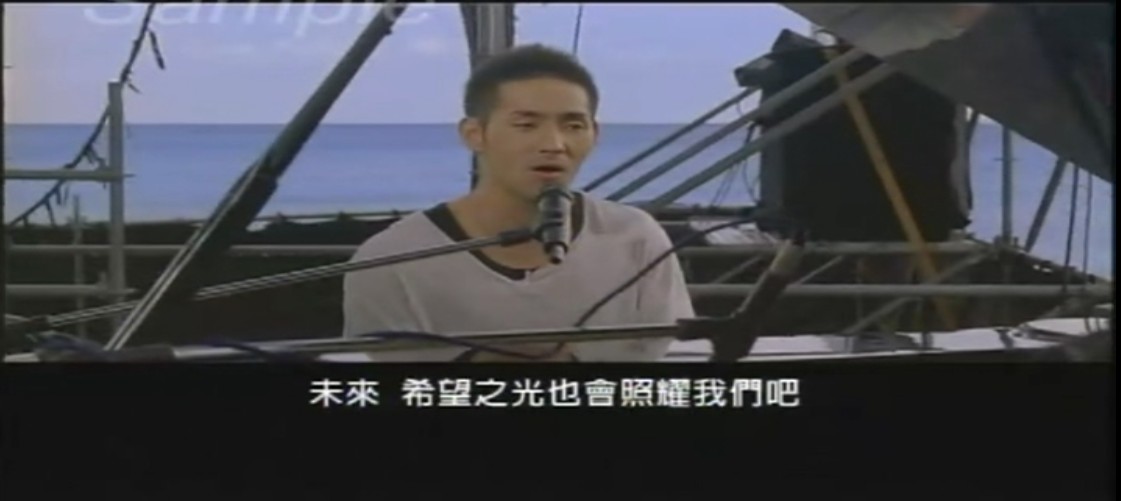
Figure 1: Japanese pop singer Atari performs on the Hengchun seashore in Cape No. 7.
The camera slowly pans across Atari’s easy demeanor and cuts to the enthralled Aga and the others, panning still in accordance with the rhythm. Aga whispers as if to himself that no wonder people tell or used to tell him that he tried too hard (“taiyongli” or “[applied] too much force”). This is perhaps the first time in the film that Aga, with his “post-traumatic stress disorder” of swinging between apathy and causticity, talks softly, to avoid interfering with Atari’s song as much as to simulate Atari’s style. It dawns on Aga that he should have exerted in his rock music less force, less masculinity, allowing the more feminine side to come out. Less Western-style hard rock, Aga seems to say, and more Japanese-style flowing finesse. The implication is that he should have been more natural and himself, more at home. That his home lies in Hengchun rather than Taipei must have aggravated his raucous and unsettling Taipei performance. Because of the absence of a vibrant cultural scene, let alone rock music, in Hengchun, it is logical to assume that such advice came to him while he was struggling in Taipei. Although the absence of verb tense in the Chinese language results in two possibilities, “tell or used to tell,” exactly who is to advise him in Hengchun when there is only a riffraff of amateur musicians? Therefore, Atari represents less of a conversion than the end of a fifteen-year incubation period.
Aga awakens to the key to music, while that key, figuratively, has been placed in his hand by others long ago—in Taipei. This snatch of Atari’s rehearsal on an unfinished stage appears to be a lead-in to the concert finale. Yet it is in fact the point on which the film pivots, transforming Aga and saving his romance with Tomoko. Its centrality is borne out by the fact that the circling shots of Atari at the piano and Aga and his band capture the blue, radiant Pacific Ocean in the background. The cooing Atari, for instance, is framed by the sea and sky in shots launched, in fact, from a stage under construction, full of steel rod scaffolding. Atari is the only singer who sings with the sea as his real stage. Atari serves as the singing coach and life coach rolled into one for Aga; he is a well-nigh father figure as the iconoclastic Aga finds it in himself after the rehearsal to bow, awkwardly, to Atari. Aga’s body language signals an amazing about-face, given the indifference and belligerence he has exhibited throughout, especially around his mother’s partner, perhaps his stepfather-to-be. The wayward son of Hengchun has finally come home to his music and his beloved Tomoko, inspired by Atari, a symbolic Japanese father.
The return of the repressed, prettified and romanticized, in Wei and contemporary Taiwanese cultural productions is a timely subject as Taiwan studies has gained prominence in academe due to postcolonial attention to the island’s colonial legacy and transnational attention to its multifaceted language, history, and culture. Such unswerving focus on Taiwan film and culture serves as an antidote to U.S.-based Chinese scholars’ general dismissal of Taiwan. To heal the China fever convulsing the global body politic, let us introduce Taiwan cool into the circulation of ideas, the yin of an island in shadow checking and balancing China’s yang. Such Taiwan-oriented studies provides a counterweight to China’s massiveness and ethnocentrism, to be enriched by Taiwan’s chameleon ambiguity and duality.
Dear You
DESPITE MY WELL wishes for Taiwan, Chinese-ness is what it is, evidenced by Dear You, which is so Sinocentric, so nationalistic that it could be re-titled as Dear Me. How to convince the strong to be soft, and the leader to be led? Fear not, China: Ambiguities abound in this delicate dance between the powers that be and the powerless, between Goliath and David. To be led is to be lead, one of the most useful metals yet potentially toxic; a leader functions like a fishing leader to lure and to catch. A big difference, though: Whereas Cape No. 7 transports Taiwan to Japan, or Nipponizes the millennial Taiwan, Dear You transports Siam to Chaoshan, China, or Sinologizes the millennial Thailand. See Figure 2 toward the end of Dear Me, when the two elderly ladies Ye Shurou and Xie Nanzhi, supposedly the protagonist Zheng Musheng’s wives from Chaoshan and from Siam, finally meet. The interior décor of carved black wood furniture, hanging scrolls with Chinese calligraphy, the TV set playing traditional Chinese opera, the ceramic tea set, and the entire spatial layout resembles a Chinese household with no sign of the setting in Thailand. Likewise, upon Shurou’s departure from Bangkok, the street scene of Chinatown reminds her, as the voiceover narrates, of “the old Shantou,” the home to which she returns. Truth be told, neither Shurou nor her Chinese audience have ever taken leave of China, imagistically and linguistically.
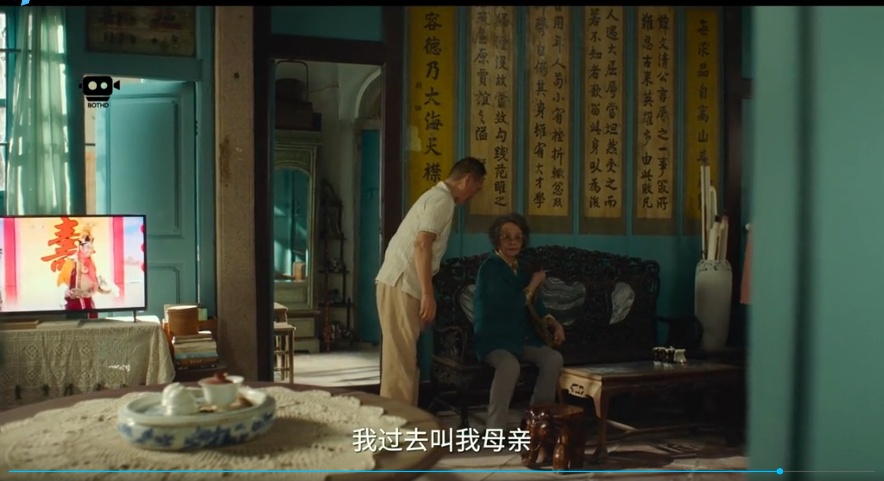
Figure 2: Chinese Thai household in Chinese décor in Dear You.
Accordingly, characters converse in Mandarin, albeit accented. There is no trace of either the Thai language for Nanzhi born and raised in Bangkok or the Chaoshan dialect, Shurou’s native tongue. The version of the film I watched had been dubbed in Mandarin, de-ethnocizing the unique Chaoshan tongue, the very essence of Dear You’s popularity. Whereas Taiwanese multilingual films thrive on heteroglossia of Taiwanese, Mandarin, Hakkanese, aboriginal tongues, Japanese, and English, their Chinese counterparts, including one capitalizing on Chaoshan’s culture and tongue, are standardized in Putonghua, the so-called “popular” national language, the dialect of the ruling Beijing in the north imposed on the south and everyone else. One exception to the Mandarin-dubbed film emerges in a misogynist moment when the father urges Xie Nanzhi to marry (Figure 3).

Figure 3: The father urges Xie Nanzhi to marry in Dear You.
The subtitle’s opening parenthesis notes “(In the Chaoshan tongue) Zouzai (daughter or go-away kid) means the kid about to go away,” or marry off. The very fact that in a Chaoshan language film, the use of the Chaoshan tongue needs to be stipulated at all reveals that it has been dubbed in Putonghua. The sexist, chauvinistic put-down of the value of daughters and women is displaced on to a particular region of a bygone era. The father stresses the need of marriage by gesturing with the liquor bottle, further sabotaging his own authority. This alcoholic father relegates the running of the hostel to his young daughter, while matchmaking frantically as though she is already halfway out the door. The bullet screen on top comments: “The man can play Lu Xun.” Indeed, the actor bears an amazing similarity of moustache and countenance to the Father of Chinese Modern Literature. The “viewer feedback” only underscores how the film circulates within the Sinosphere, made and enjoyed exclusively therein.
Just as Aga, disenchanted with Taipei, returns to his hometown of Hengchun, a young Chaoshan man Zheng Xiaowei, hounded by debtors, absconds to Bangkok in hopes of locating his deceased grandfather Zheng Musheng’s surviving Chinese Thai family in order to gain a share of the family fortune. In comparison, Aga’s motive is far purer than Xiaowei’s, who has no concern for the migrant ancestor’s life story other than monetary inheritance. Xiaowei is not alone: his father actively abets, for lack of a better word, the quest of “tomb-robbing,” one of the obsessions of Chinese films lately, by distracting the family matriarch Ye Shurou, Musheng’s Chaoshan wife, while Xiaowei steals into the attic to rifle through bundles of letters purportedly from Musheng containing the Siamese postal address.
What Xiaowei discovers, however, is so heart-wrenching that it converts even this young Philistine, not to mention millions of Chinese viewers equally flailing in a cutthroat capitalist-communist, K-shaped economy. By seeking out the son of his grandfather’s alleged second wife Xie Nanzhi, Xiaowei comes to understand his grandfather, belatedly. A resourceful scrapper, Zheng Musheng endeared whoever he encountered, including Xie Nanzhi who managed the Chaoshan migrant workers’ hostel in Bangkok on behalf of her alcoholic father. Her first name Nanzhi (南枝southern branch) puns on the suggestion that she belongs to the southern extension of Chineseness into Southeast Asia, on the one hand, and, on the other, that she is the branch on which fellow countrymen from Chaoshan perch in their overseas saga. Her surname Xie (謝) is a perfectly normal family name, but it also means “courtesy of” as well as “wilted.”
The former association of thankfulness manifests itself in the mutual indebtedness between Nanzhi and the Chinese community she served. The symbiotic relationship emerges when the hostel is set ablaze by Indian-looking villains whose bid to purchase the hostel was turned down. In retaliation, the Indian miscreant first stages a police raid against the Chinese language school, banned in Siam, only to find the students, warned beforehand, engaged in a sewing class (Figure 4). Ultimately powerless against the Thai police and Indian scoundrels in cahoots, Figure 5 captures a young teary Nanzhi gazing up at the conflagration that engulfs the hostel, with the residents gathered in the background.


Figure 4: An Indian scoundrel summons Thai police to crack down on Chinese language school in Dear You.

Figure 5: Nanzhi and Chaoshan migrants gaze at the hostel burning down in Dear You.
Torched is not only the branch onto which Nanzhi and her renters reside but also the sole Chinese language school in Siam, which Nanzhi runs illicitly for migrants’ children as well as for herself, as illiterate as Musheng at the outset. The second meaning of Xie, or “wilted,” encapsulates the sense of bereavement in Figure 5, mourning both individual and collective loss, in particular the symbolic return of the motherland via the mother tongue. Yet Nanzhi has persisted to the extent that when Musheng, in 1960, was bludgeoned to death as he intervened to stop a robbery, Nanzhi has continued for the next thirty years to write as though she were Musheng’s letter writer and sent remittances to Shurou, keeping up the illusion that Musheng was prospering, too busy with his business to return to his family. Unaware of Nanzhi’s benevolence and largesse, Xiaowei mistook her for his grandfather’s Siamese wife, who has monopolized all the assets upon Musheng’s death. All the money financing the Chaoshan family for three decades has been eked out by a single woman raising Chinatown orphans and setting up Chinese schools in Siam. Despite being a zouzai by birth, Nanzhi the daughter has never walked away from Chineseness.
Nanzhi’s generosity appeared to be inspired by the scene she had witnessed amidst the professional letter writer’s long queue of fellow countrymen. One migrant cut in line to rush to send remittances back home to “buy back” his young daughter having been sold off. Another group chipped in to help a distraught man raise enough funds to tide over his family crisis in Chaoshan. A thirty-year-old lie comes to light when Xiaowei greets his grandmother Shurou in Bangkok, who brings homemade olives and other delicacies to her family’s guardian angel, now white-haired, wheelchair-bound, suffering from dementia. She no longer recalls the past, except in a rare moment of lucidity when she inquires whether Shurou enjoys the salted pork she sent to China. If so, she promises to make more. In return, Shurou shares olives portaged from thousands of miles away. As Nanzhi cringes at the pungent taste, Shurou counsels, as the Chinese subtitle says, “Bitter first, then sweetness” (Figure 6). This maxim is as much in the Chinese DNA, reminiscent of the Book of Job, as in the PRC propaganda of yikusitian (“Remember bitterness, Think of Sweetness”) that somehow smooths over historical injustice and individual woes spanning decades of political purges and the Cultural Revolution, all on the strength of latter-day individual rehabilitation and millennial collective rise of China.

Figure 6: Nanzhi tastes Shurou’s olive in Dear You.
The irony, however, lies in the fact that the benefactor for Chaoshan, China, is so diminished that she is patronized by the benefacted. The Siamese “mother” who has suckled a stranger and her three children for thirty years now sucks from the Chinese offering of olive and winces. If Cape No. 7 strives to light out in a centripetal movement, to Japan specifically, then Dear You reverses the flow, centrifugally, toward China itself. Between the opening lyric of the Moody Blues and the last word dictated by China Red pointing with her finger and holding a red silk-cotton flower, what color would Taiwan wear? Is it the blue of Taiwan’s pro-status quo Nationalist (Kuomingtang) Party? The green of the pro-independence Democratic Progressive Party currently in power? The disappearing white of the Taiwan People’s Party? The red, white, and blue of the Yankee Father? The radiant sun of the Japanese Emperor? None of the above? All of the above? Something else altogether yet to be conceived and birthed?